My Indie Maker Journey: From Failed SaaS to $250 MRR
The unpolished version: an overbuilt first company, several products nobody wanted, a different way of building, my first recurring SaaS customers and the lessons I am still learning.
 Api Alam
The short version
I did not become an indie maker through one clever launch. I started at university with professors, a large education idea and the confidence that doing all the official company work meant we were building a real business.
We built too much. We discussed ownership, deeds and formal company details before we understood the customer or found the smallest useful MVP. iLearnX failed within roughly a year, and I had to exit the first business I had helped start.
Then I tried two or three SaaS products on my own. They failed too. Joining X and watching other indie makers changed how I approached the work: speak to customers, ship a narrower product, learn marketing, and let feedback change the roadmap.
That approach became BulkShare. I found its first users within about three months, and today it makes $250 in monthly recurring revenue. It is not a victory-lap number. It is the clearest evidence I have had that the new process works better than the old one.


iLearnX: my first business and first hard lesson
I studied computer science at American International University-Bangladesh. While I was still at university, I started iLearnX with professors. The idea was to create an education platform that helped bridge the gap between university learning and industry skills.
It was the first time I thought of software as a business rather than a project. That excitement made us ambitious—and ambition made the product complicated. We tried to make the company look complete before we had proved that one narrow customer problem deserved a company.
We worked through ownership, documentation and official setup. We built features and systems. What we did not do enough was sit with customers, challenge the idea and ask what the minimum useful version should be.
After about a year, the business failed and I exited. It was painful, but the lesson became simple: a registered company can still be an unvalidated idea. Paperwork creates a company. Customers create a business.
Then two or three more SaaS ideas failed
Leaving iLearnX did not immediately turn me into a disciplined founder. I tried two or three SaaS products personally, and they failed badly. I could build them, but I still had not learned how to find a market, earn attention or involve customers early enough.
The pattern was embarrassingly consistent: the product existed before the distribution plan, and my assumptions lived in code longer than they lived in customer conversations.
Client automation work through Automation Lab helped expose the difference. A client did not care how many abstractions sat behind a feature. They cared whether it removed a repeated task, protected their data and worked when the business needed it. That pulled me closer to boring problems with visible outcomes.
I do not regret those failed products, but I would not romanticize them either. They cost time. Their value came later, when I finally changed the way I built.
Watching indie makers on X changed my approach
When I joined X, I found makers sharing the part I had been missing. They did not only post finished interfaces. They talked about customer calls, small launches, pricing, traffic, monthly revenue and the awkward work of getting the first users.
I started treating marketing and customer acquisition as founder work, not the activity that begins after development. I tried to make the MVP smaller, ask for feedback sooner and discuss the product with the people who might actually pay for it.
Building in public did not magically create distribution. It changed my feedback loop. Instead of protecting an idea until it looked finished, I could show the work, hear objections and improve it while the scope was still cheap to change.
Three makers who made the path feel possible
- Tibo Maker
- His approach connected customer pain, fast shipping, product judgment, SEO and distribution. He later became someone I was fortunate to build alongside.
- Marc Lou
- His habit of shipping repeatedly made speed feel less like launch-day pressure and more like a skill a solo founder can practise.
- Pieter Levels
- His public list of successful and failed projects showed me that a high failure rate can sit beside a durable indie business—if you keep launching and listening.

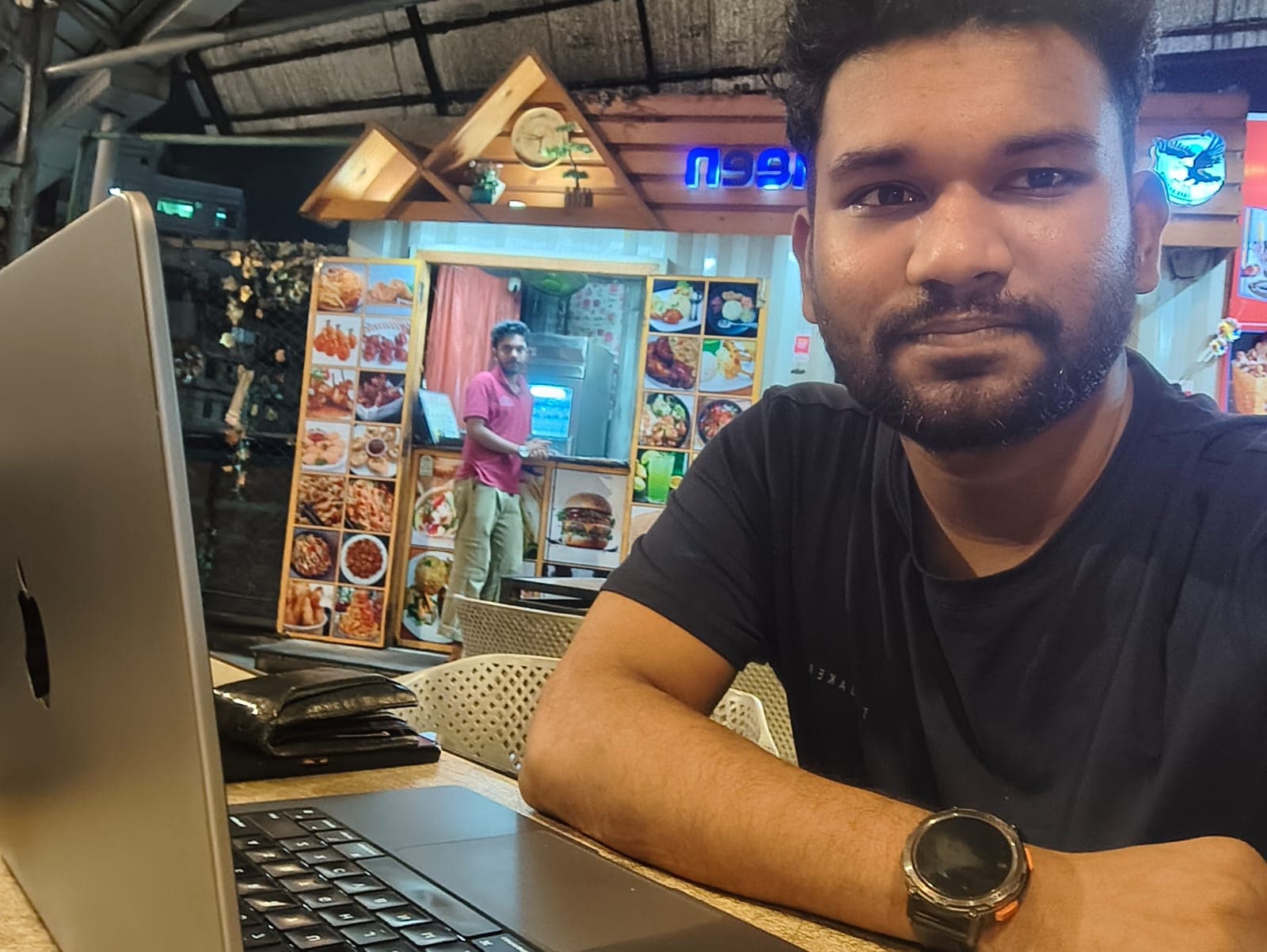
BulkShare: finding the first users within three months
BulkShare began with a boring handoff problem. Agencies and freelancers could do excellent work, then finish the project with a generic file-transfer link that expired, carried another company's brand or left them asking, “Did the client open it?”
This time I resisted the urge to begin with a platform. I focused on one job: help a service business deliver client files through a professional, trackable link. I spoke with users, watched what confused them and let those discussions shape the MVP.
Within about three months, I had secured the first users. I was doing the code, support, marketing and customer acquisition myself, so there was nowhere for feedback to disappear. A customer question could become a copy change that day or a product decision the next morning.
BulkShare now makes $250 MRR. On the internet, that is a small number. To me, it marks an important change: people I did not know were paying every month for a product shaped around a real workflow.
Working alongside Tibo changed how I see software
I later got the chance to work alongside Tibo Louis-Lucas. Watching an experienced indie maker handle software up close taught me things I could not learn from launch threads alone.
I saw how product choices are weighed through their pros and cons, how a feature connects to positioning, and how SEO and distribution become part of the product system. Working on products including SuperX made the lesson concrete: shipping is only one part of making software travel.
The biggest shift was understanding that product, marketing and distribution are not three separate jobs waiting for three future departments. For an indie maker, they are one loop. The promise earns attention, the product delivers it, and customer behaviour decides what happens next.
Tibo Louis-Lucas / co-maker
A closer view of product judgment, launch mechanics, SEO and distribution at a scale beyond my solo experiments.
The quiet part of indie making
I once wrote that coding remotely as an indie maker can feel lonely: “Working alone. Talking only to my screen.” Building in public gives the work an audience, but an audience is not the same as a teammate sitting beside you when a launch is flat or a customer leaves.
Independence means I can choose the product, pace and direction. It also means the uncertain decisions eventually return to me. Some days I am the developer. On others I am support, product, copywriter and the person trying to understand why nobody replied to an offer.
I build from Bangladesh, but I do not see that as a footnote. The products, collaborators and customers are global; the work still happens from an ordinary desk, café or room in Dhaka. That contrast keeps the journey real for me.
The answer to loneliness has not been pretending I need nobody. It has been finding customers, peers and collaborators who make the work less isolated and my decisions less self-referential.
What I believe now
These are not rules I collected before starting. They are the ideas that survived the failed products and the first paying customers.
Customer work comes before company theatre
Legal structure and ownership matter, but they cannot replace interviews, a narrow buyer and a useful first workflow.
A small paid signal beats a large imagined market
$250 MRR is not a finish line. It is stronger evidence than a deck full of people who might use the product someday.
Marketing is part of the product job
As a solo founder I cannot finish the code and wait for someone else to create demand. Acquisition, support and positioning belong in the week.
Feedback should change the scope
A customer conversation is useful only when I am willing to remove, reorder or reshape what I planned to build.
Distribution deserves engineering-level attention
SEO, launch mechanics and shareable product moments are systems. They improve through the same observation and iteration as software.
Independence does not mean isolation
Building solo still requires customers, peers and collaborators who challenge the assumptions I cannot see from inside the codebase.
The road from $250 to $1K MRR
My next public milestone is simple: grow BulkShare from $250 to $1,000 MRR. I want to do it without forgetting the lesson that finally produced the first customers—stay close to the workflow, keep acquisition in the week and let real usage decide what earns more code.
This journey also changed how I build for other founders. My fixed-scope SaaS MVP service is deliberately narrow because I have lived through the expensive alternative. I would rather ship one complete customer loop in 2–3 weeks than spend a quarter making an untested idea look like a large company.
If you are earlier in the process, start with my guide to validating a SaaS idea before building. If the idea is clear, the companion guides explain a realistic MVP budget and development timeline.
Public notes and links
This is a first-person account, supported by the public products and posts below. Revenue is a snapshot from August 30, 2026 and will change as the journey continues.
- Api Alam on LinkedIn
- American International University-Bangladesh
- iLearnX
- My early DEV profile and iLearnX work
- Building SuperX alongside Tibo
- The story behind BulkShare
- BulkShare
- Build-in-public notes on X
- From Notepad++ to AI-assisted development
- First internet revenue milestone
- The lonely side of indie building
- The years before the first revenue
- BulkShare Product Hunt launch
- Tibo Maker
- Marc Lou
- Pieter Levels: projects and failures
about the author

Api Alam
Indie maker and bootstrap founder. I build SaaS products, ship in public and help founders turn a focused scope into a working MVP.
How I build MVPs